5 h
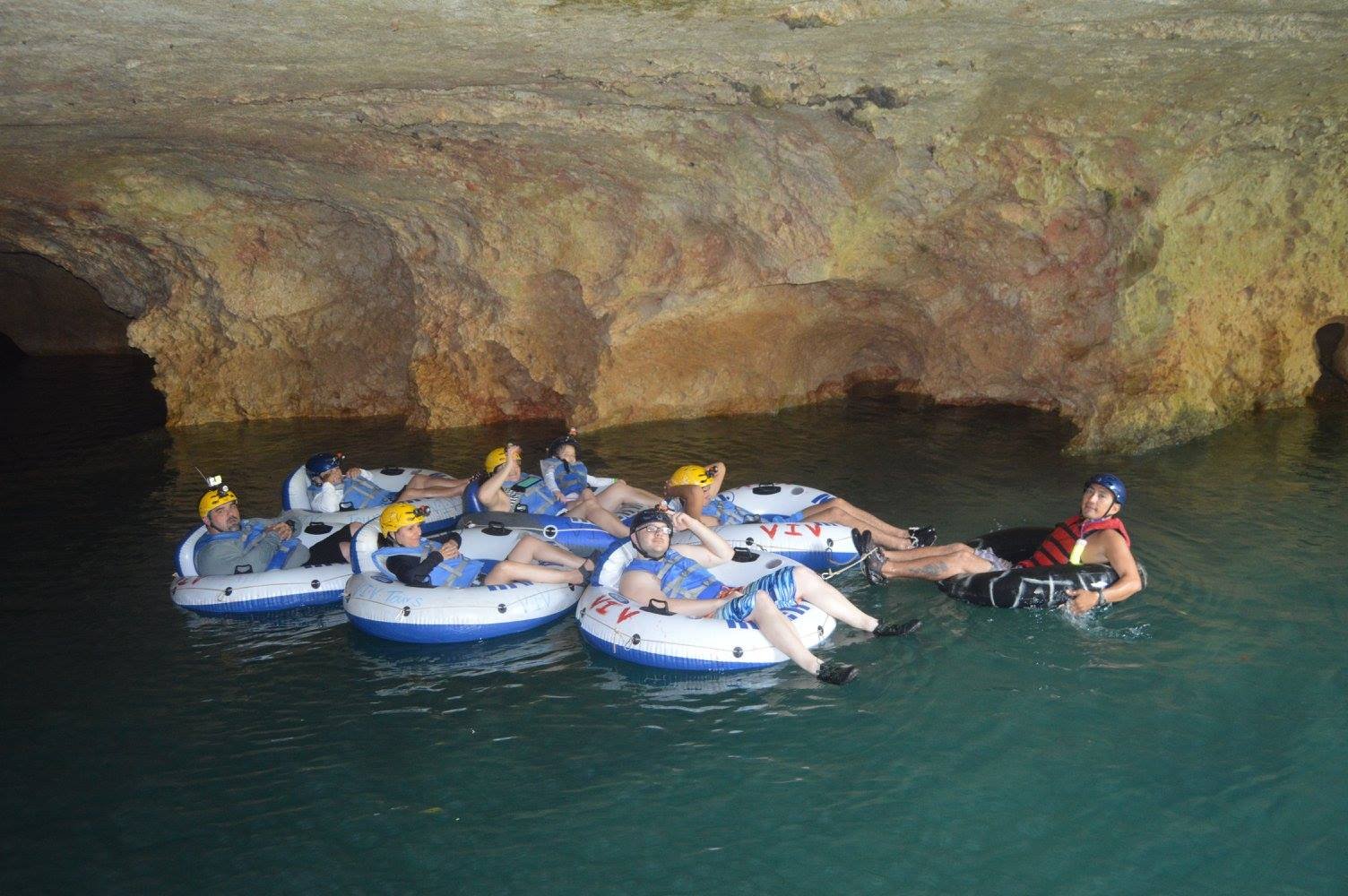
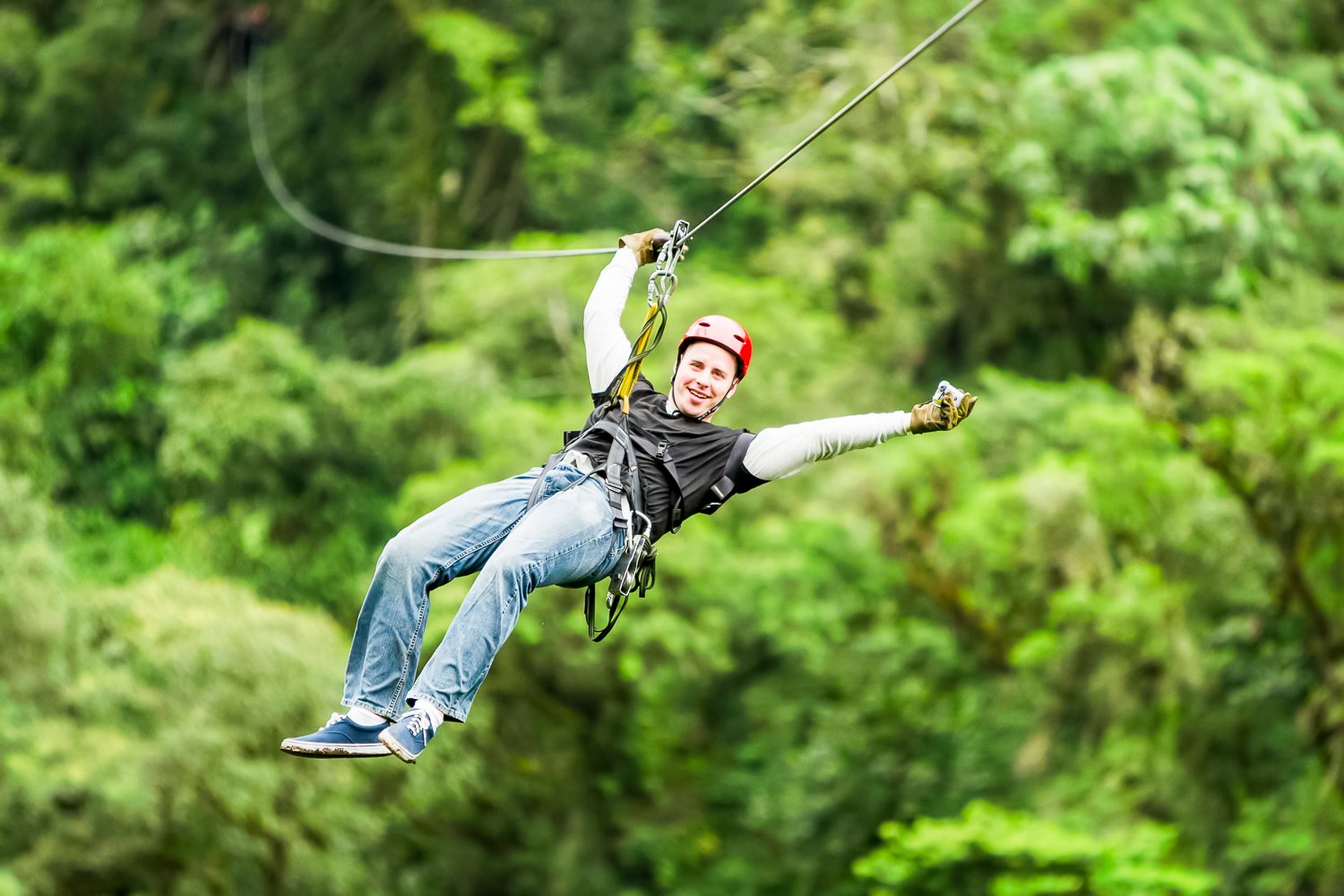
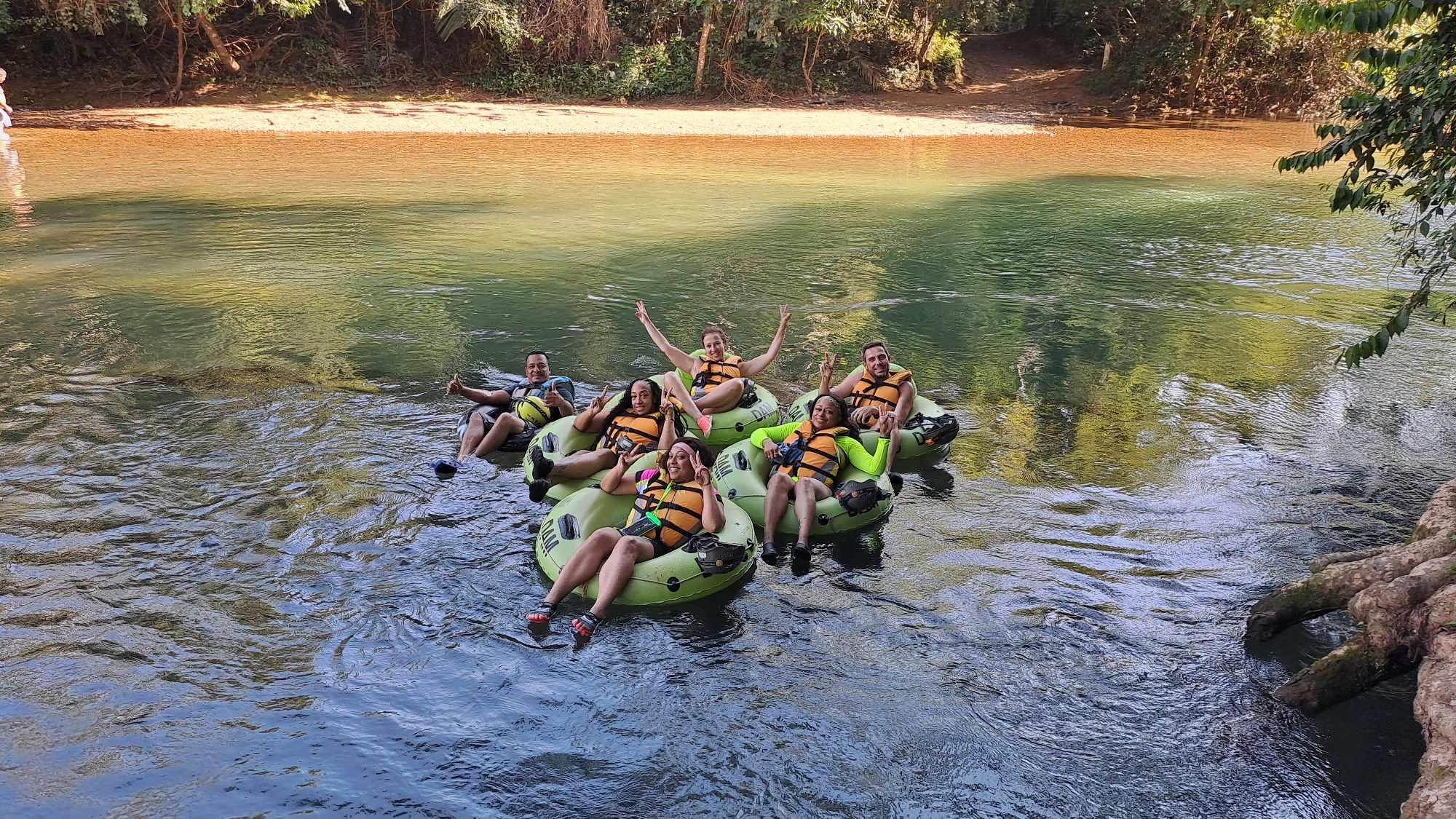
Belize Rainforest Cave Tubing & Zipline Adventure
- Entrada
- Bono móvil
- Válida el mismo día
- Cancelación gratuita
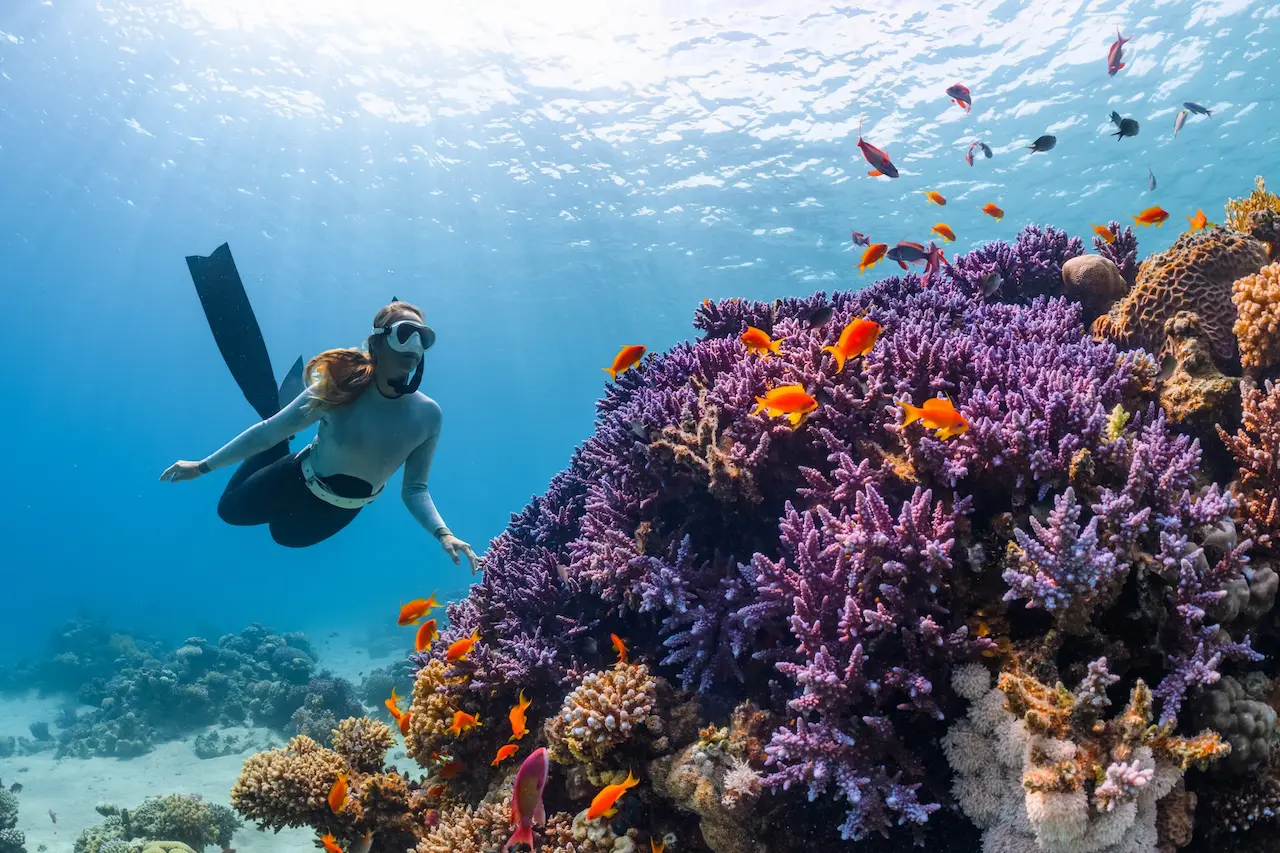
Caribbean waters sixty feet deep, coral gardens older than the pyramids
Compara tarifas y elige la que más te convenga — todas las reservas incluyen bono móvil y cancelación gratuita donde se indica.
5 h
5 h
6 h 30 min
| Experiencia | Duración | Valoración | Traslados | Guía | Grupo reducido | Cancelación | Precio | |
|---|---|---|---|---|---|---|---|---|
|
Entrada estándar
Más popular
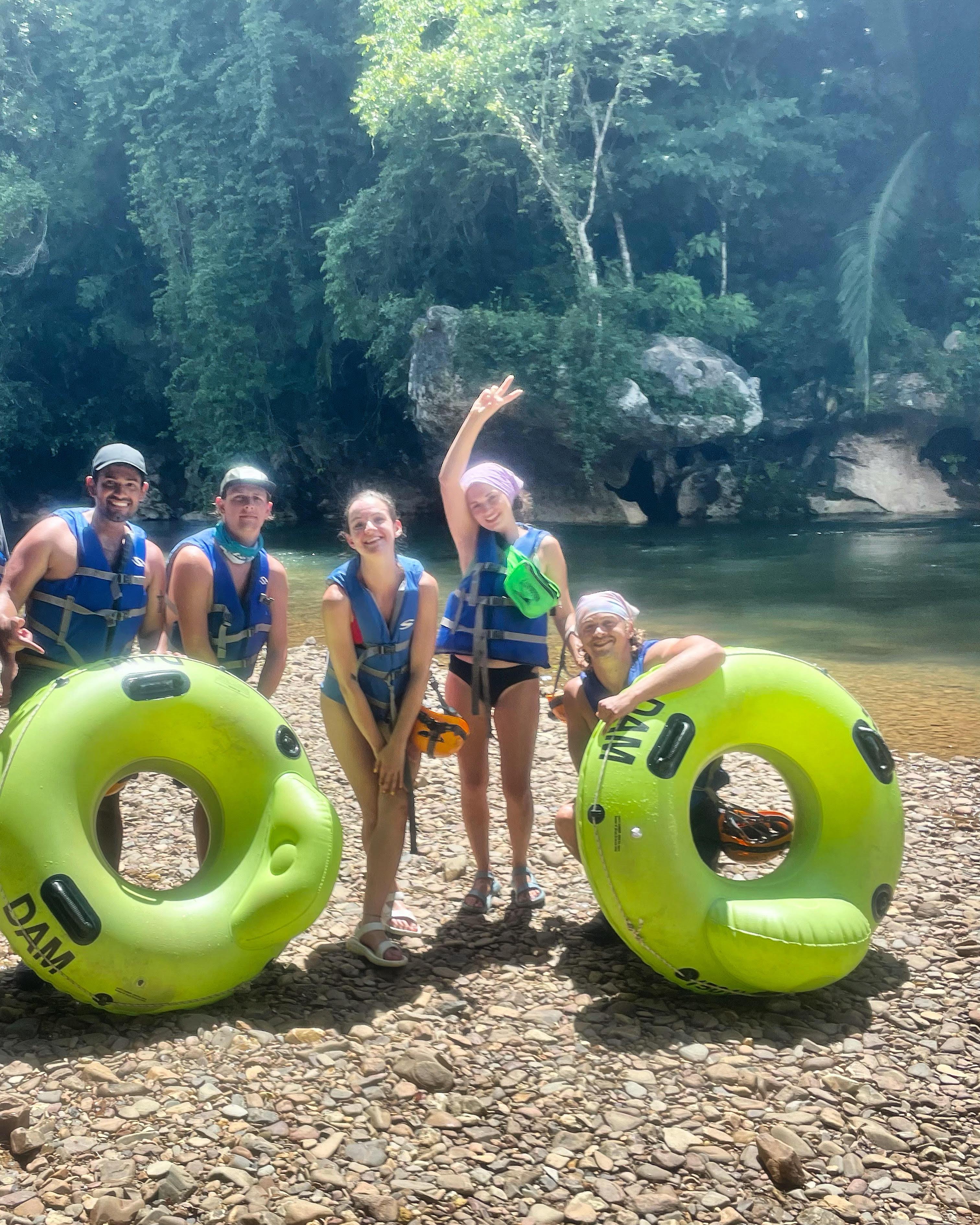
Belize Rainforest Cave Tubing & Zipline Adventure
|
5 h | ★ 4.8 | — | — | ✓ | ✓ | €61 | Reservar → |
|
Entrada estándar
Cave Tubing & Zipline Adventure in Belize's Rainforest
|
5 h | ★ 4.9 | — | ✓ | ✓ | ✓ | €101 | Reservar → |
|
Con guía
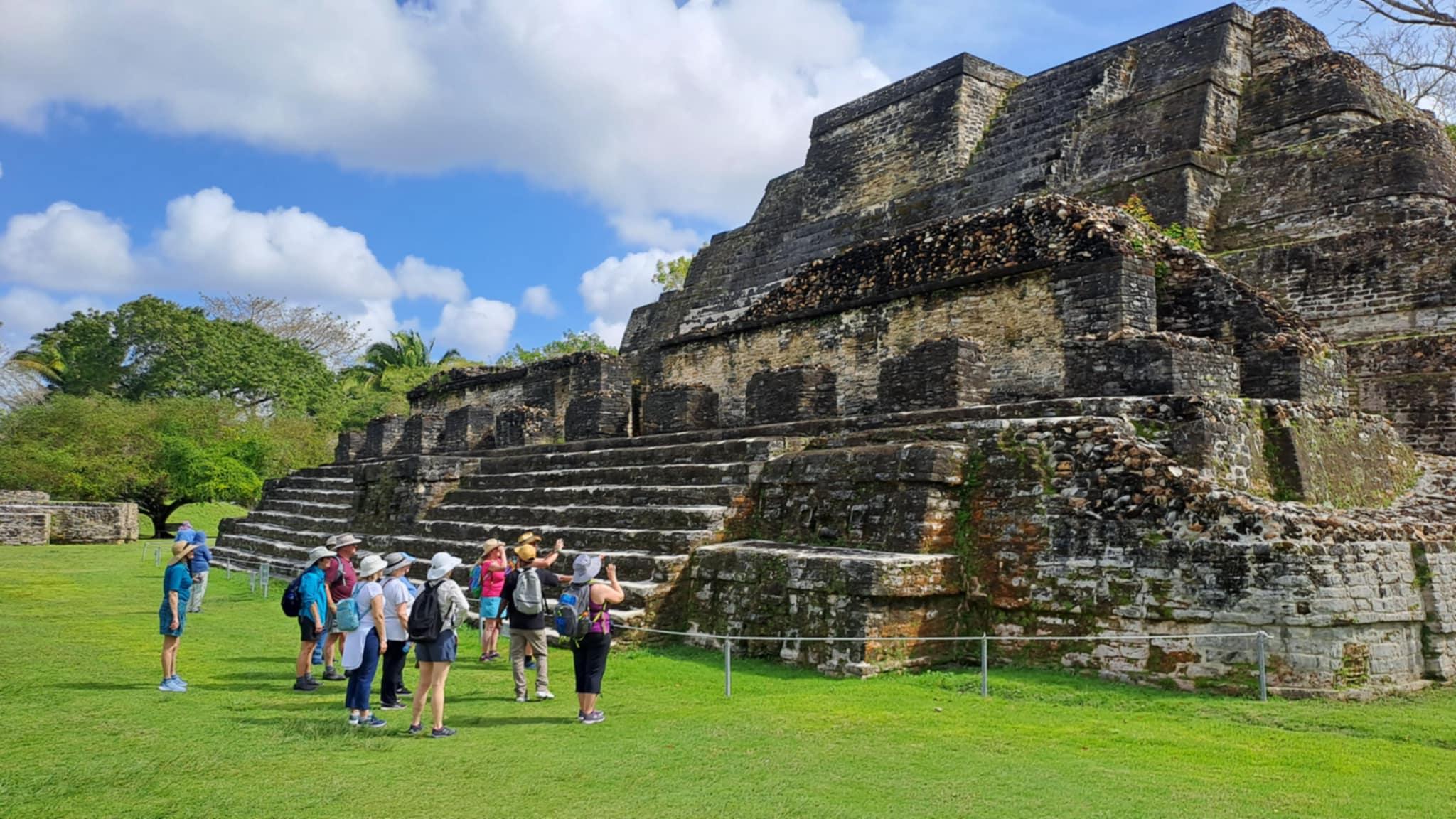
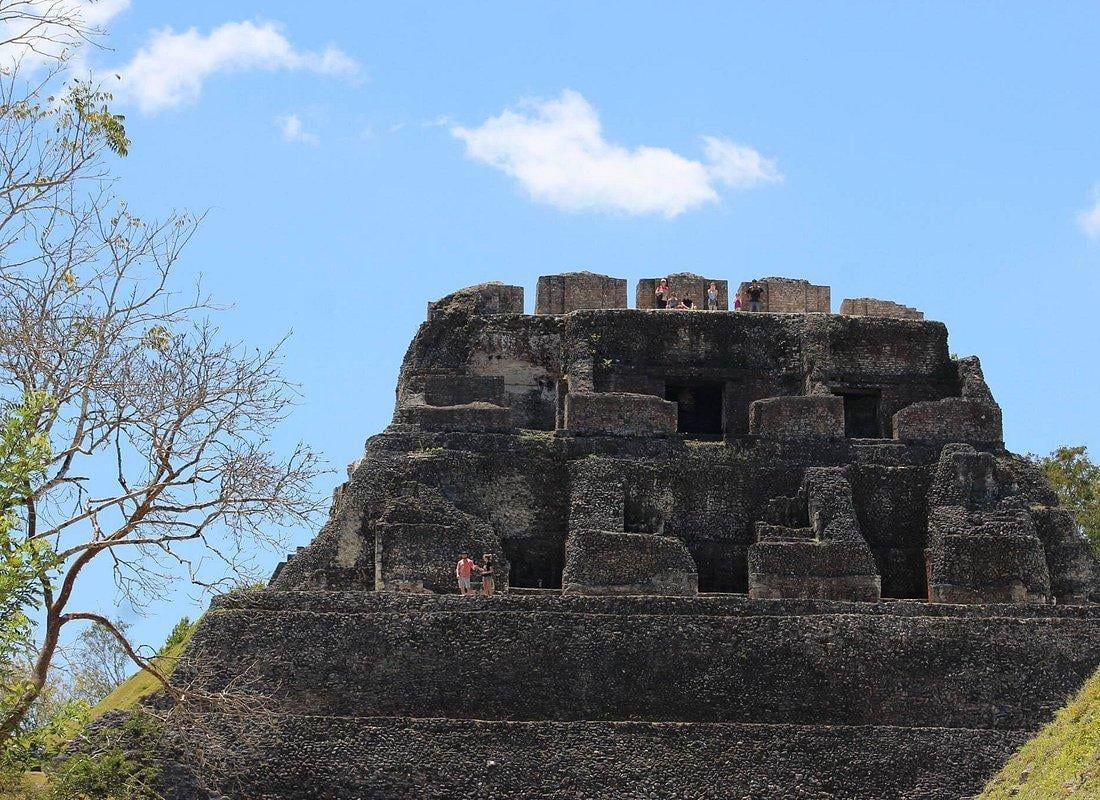
Lamanai Maya Ruins River Safari with Lunch
|
6 h 30 min | ★ 4.9 | ✓ | ✓ | — | ✓ | €119 | Reservar → |
Worth it for serious reef explorers only
Snorkeling in Belize City requires a clear-eyed value assessment. The Belize Barrier Reef itself — a UNESCO World Heritage site stretching 190 miles — charges no entrance fee, but access from the city demands booking a guided boat tour. Most operators charge USD 75–150 per person for half-day excursions that include transport, gear, and a guide who knows current conditions and marine life hotspots. The reef delivers on visibility when conditions cooperate: shallow coral gardens teem with parrotfish, nurse sharks, and rays, and the morning departure window (08:00–11:00) catches calmer seas before afternoon wind chop degrades underwater clarity. For travelers prioritizing coral biodiversity over convenience, the investment pays off — this is the second-largest barrier reef system on Earth. For casual snorkelers or those short on time, the logistical commitment and cost may outweigh the payoff, especially since none of the bookable Belize City tours on this page include dedicated snorkeling in Belize City reef access.
Bottom line: The reef's marine richness justifies the boat tour cost for dedicated snorkelers, but casual visitors may find better value in combo excursions that pair snorkeling with other activities.
Snorkeling in Belize City means quicker boat access to Barrier Reef sites like Goff's Caye, while Ambergris Caye trades a longer transfer for calmer, clearer water at Hol Chan and Shark Ray Alley; most day-trippers pick Belize City for convenience and San Pedro for visibility.
|
Top pick Belize City Departure |
Ambergris Caye / San Pedro | |
|---|---|---|
| Distance from Belize City | 0 mi (departure point) | 36 mi (58 km) north |
| Boat transfer time | 30–45 min to Goff's Caye/reef sites | 75–90 min by boat, or short hop by water taxi then reef boat |
| Water clarity | Good, variable with wind and runoff | Very good to excellent, less coastal sediment |
| Crowd levels | Moderate, mixed with cruise-ship day-trippers | Moderate to high near Hol Chan, quieter further out |
| Typical cost | See live tour pricing below | Generally higher due to added transfer leg |
| Best for | Cruise passengers and short mainland stays | Multi-day stays prioritizing reef visibility |
| See tickets & prices |
Verdict: Choose Belize City for a shorter, simpler trip with solid reef access; choose Ambergris Caye if clearer water and marine-life density matter more than travel time.
Experiencias seleccionadas amadas por miles de viajeros
4 hours
Cancelación gratuita
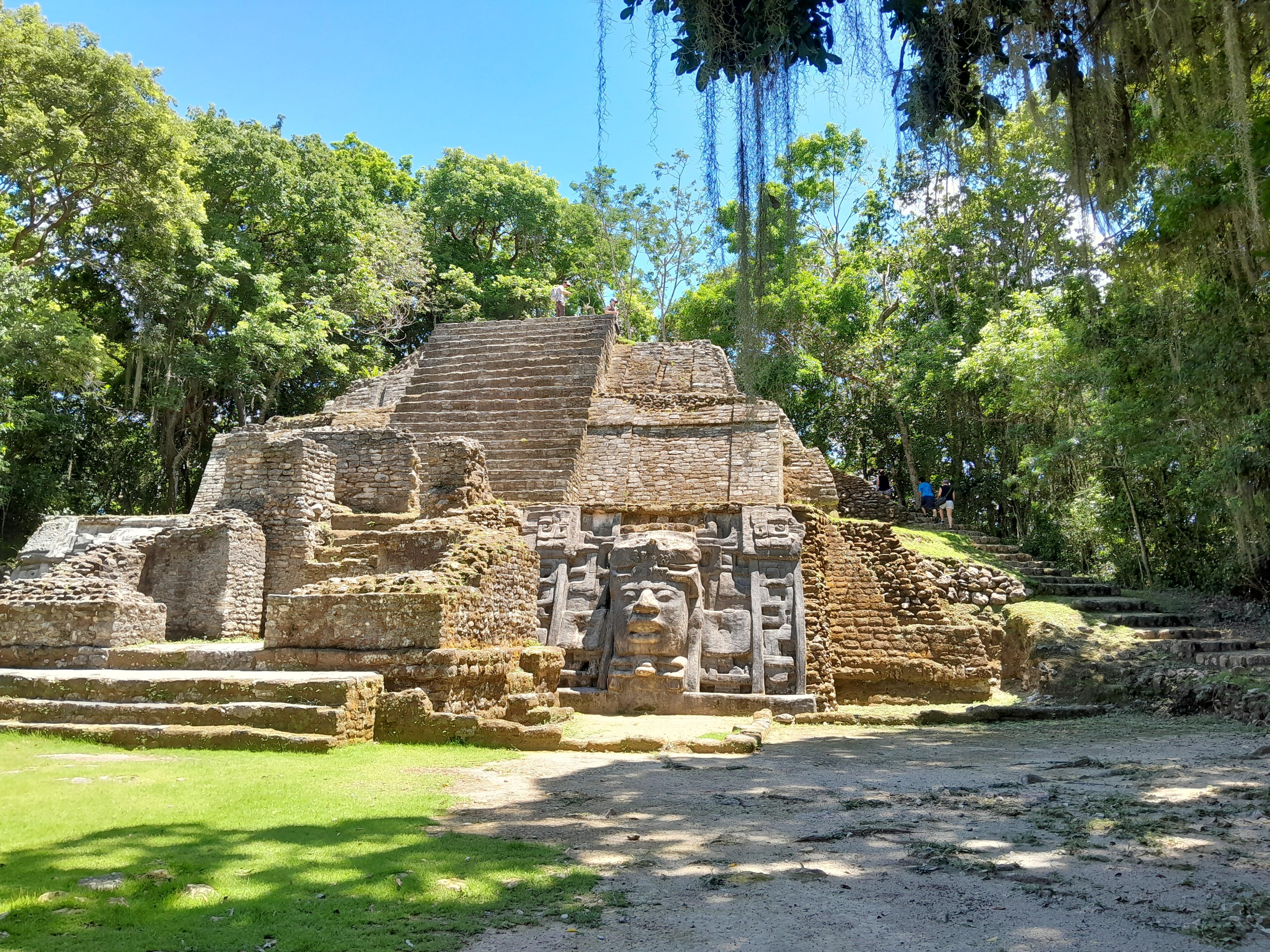
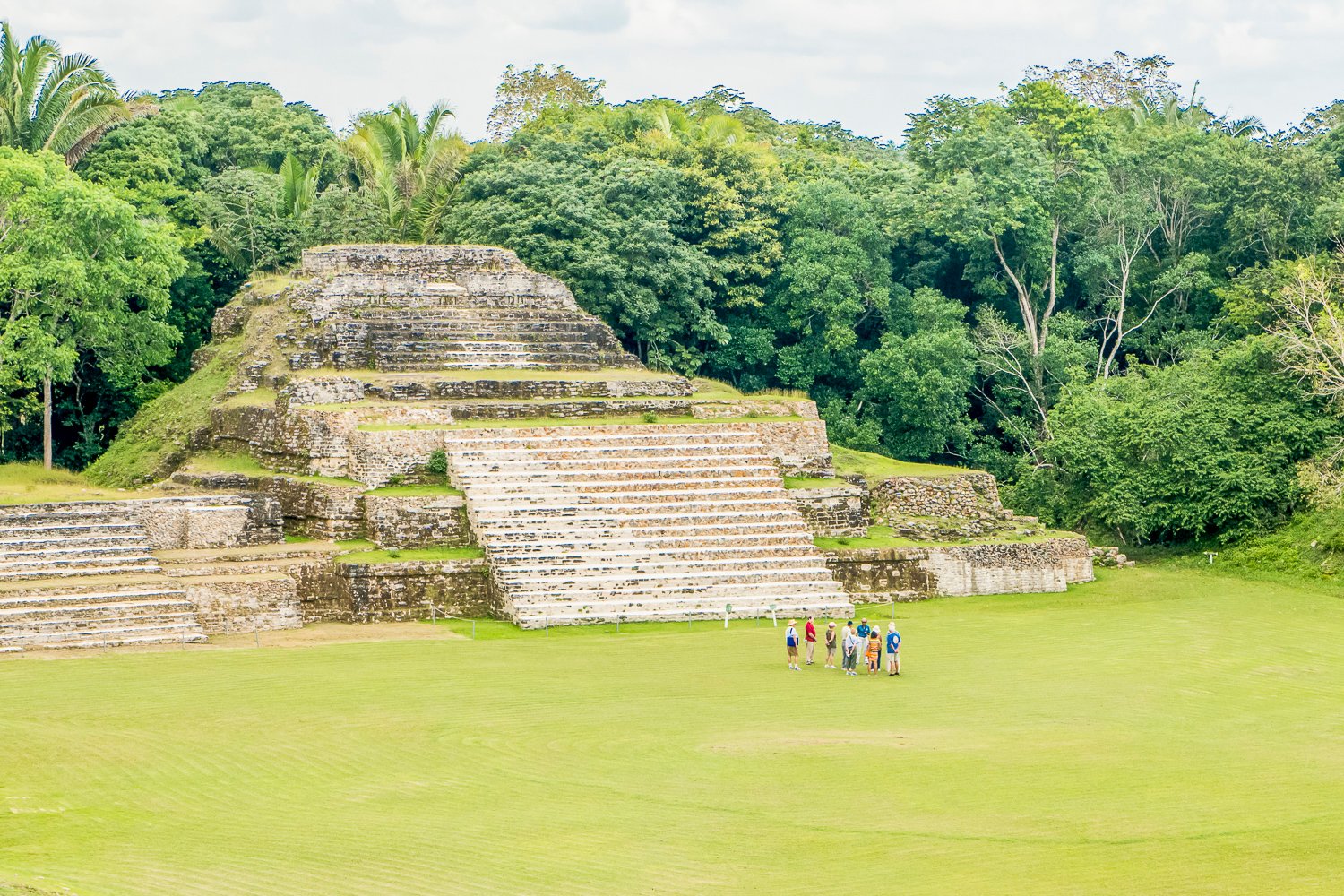
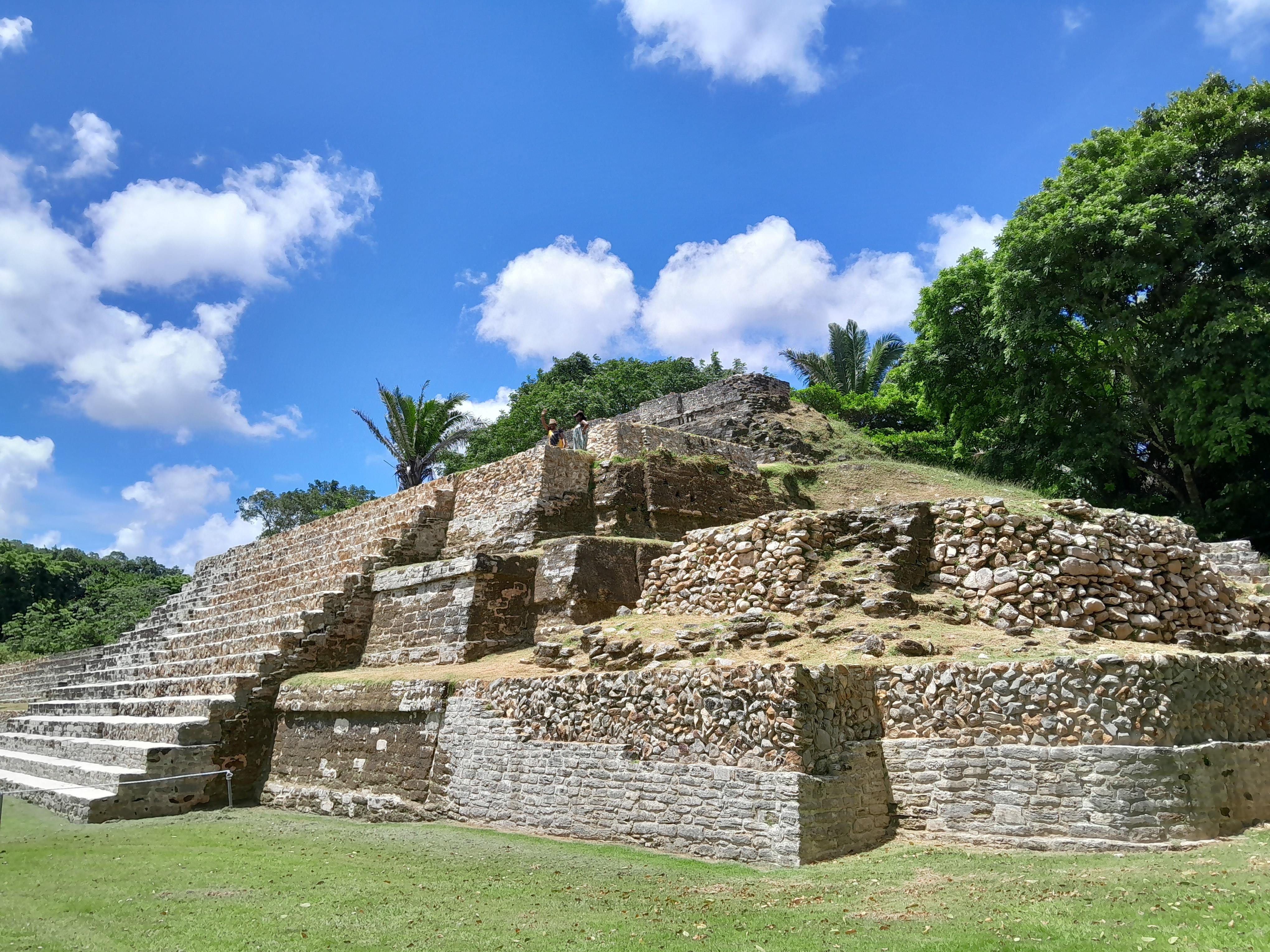
Explore ancient temples dating to 200 BC and discover the colonial charm of Belize's historic capital
5 hours
Cancelación gratuita
Journey through ancient temples, float through mystical caves, and soar above the jungle canopy
5 hours
Cancelación gratuita
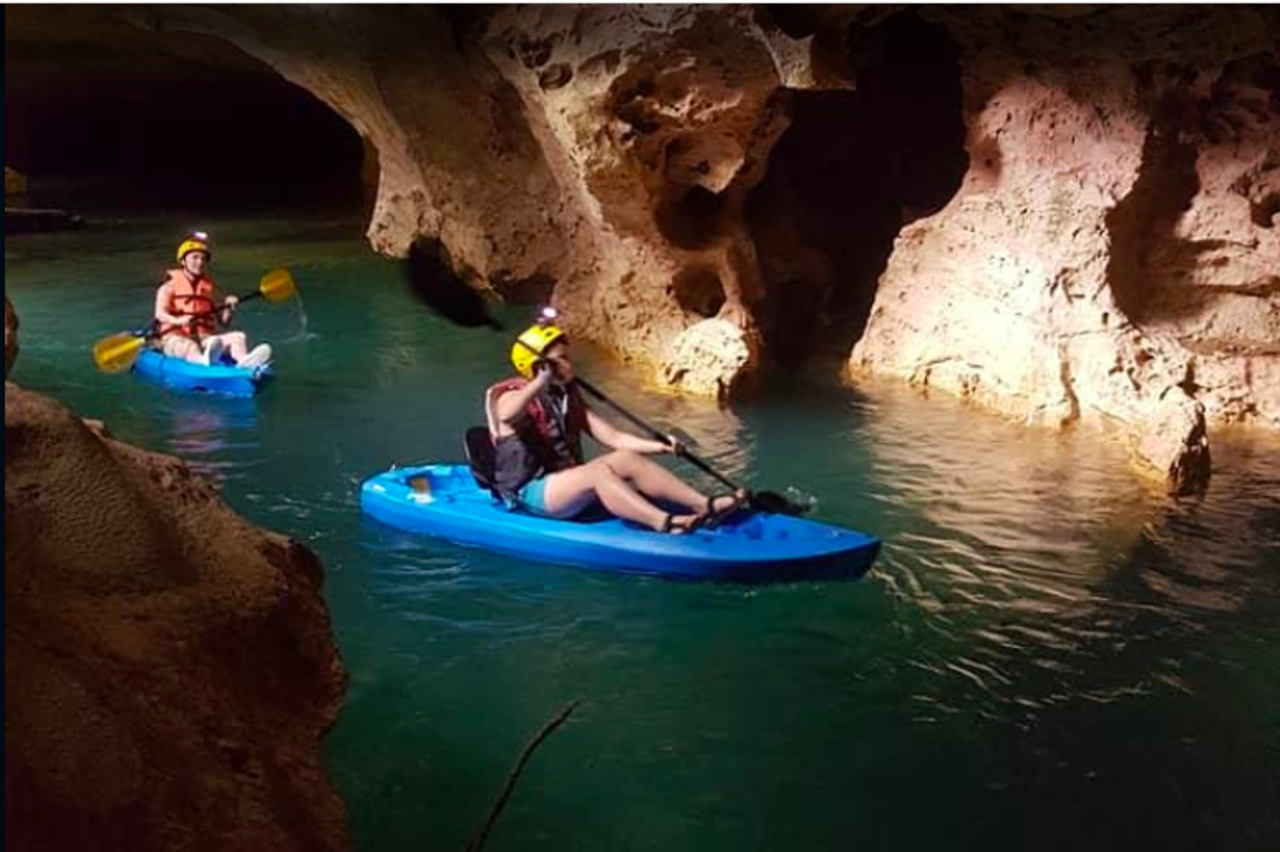
Paddle through underground cave systems, swim in natural pools, and trek through jungle trails
3 hours 30 minutes
Cancelación gratuita
Journey to an ancient Maya ceremonial center and discover the site of Belize's most precious jade treasure
2 hours
Cancelación gratuita
Discover colonial landmarks, wildlife, and local flavors on a guided drive through Belize City with complimentary rum tastings
4 hours
Cancelación gratuita
Float through ancient limestone caverns and hike lush jungle trails on Belize's most beloved adventure
6 - 8 hours
Cancelación gratuita
Float through ancient cave systems and climb a towering Mayan pyramid in one unforgettable day
4.5 - 7 hours
Cancelación gratuita
Journey through Belize's premier birding sanctuary and explore ancient Maya temples with optional wildlife encounters
A protected channel cut through the reef that draws dense concentrations of grouper, snapper, and sea turtles in water often less than 30 feet deep. Established in 1987, it was one of the first marine reserves in Belize.
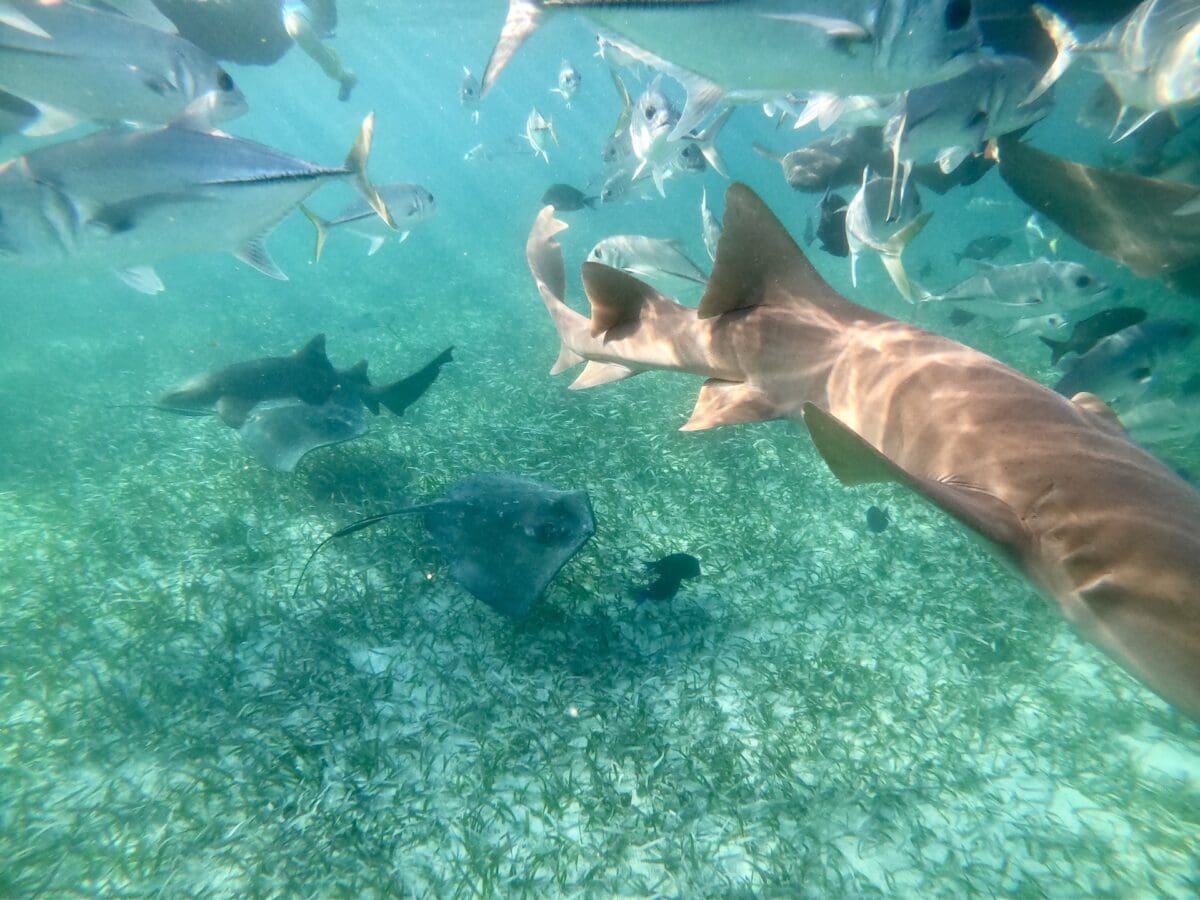
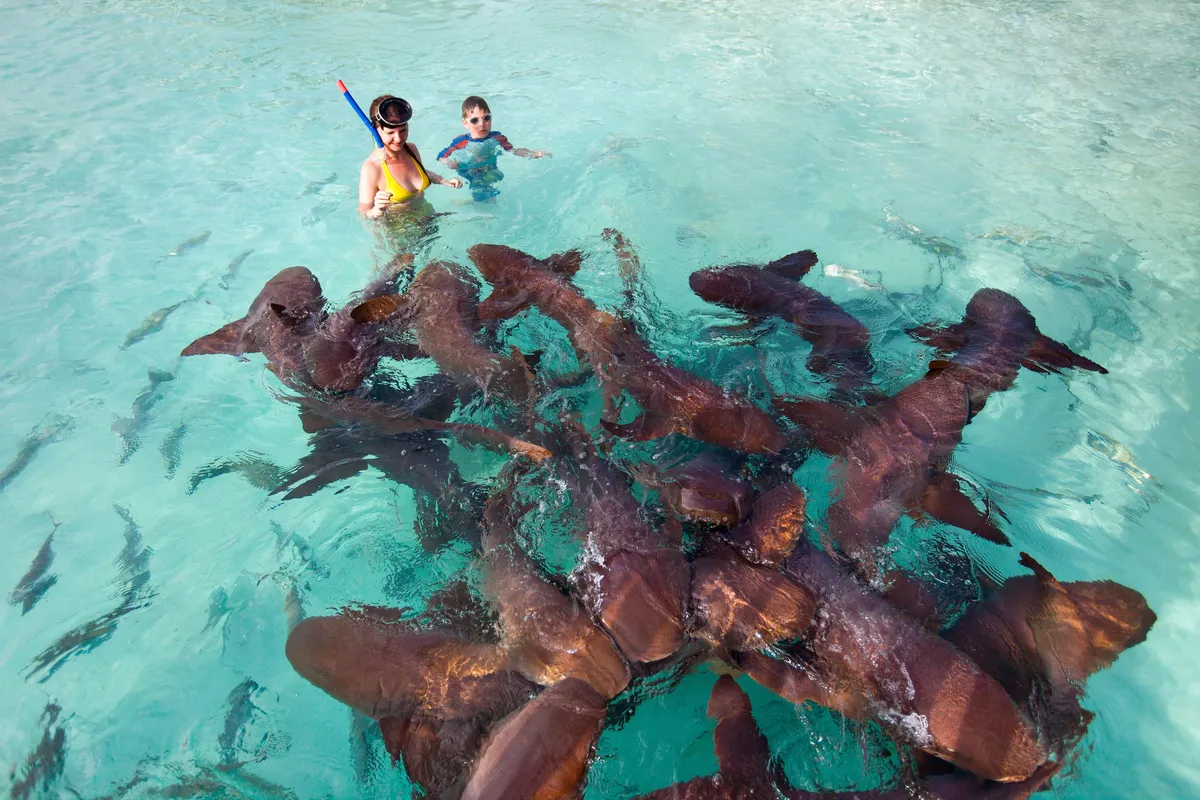
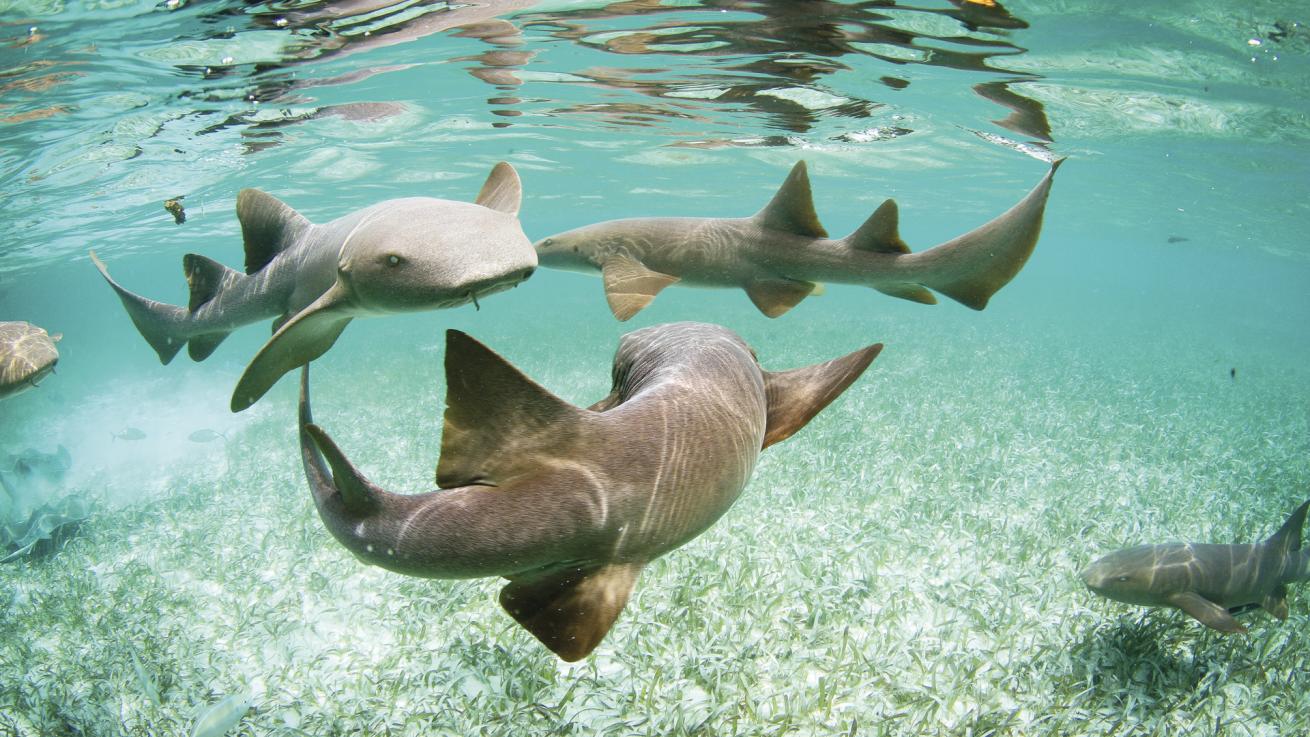
A shallow sandy area adjacent to Hol Chan where nurse sharks and southern stingrays gather in numbers, a behavior originally drawn by fishermen cleaning catch decades ago. Visibility here often exceeds 50 feet on calm days.
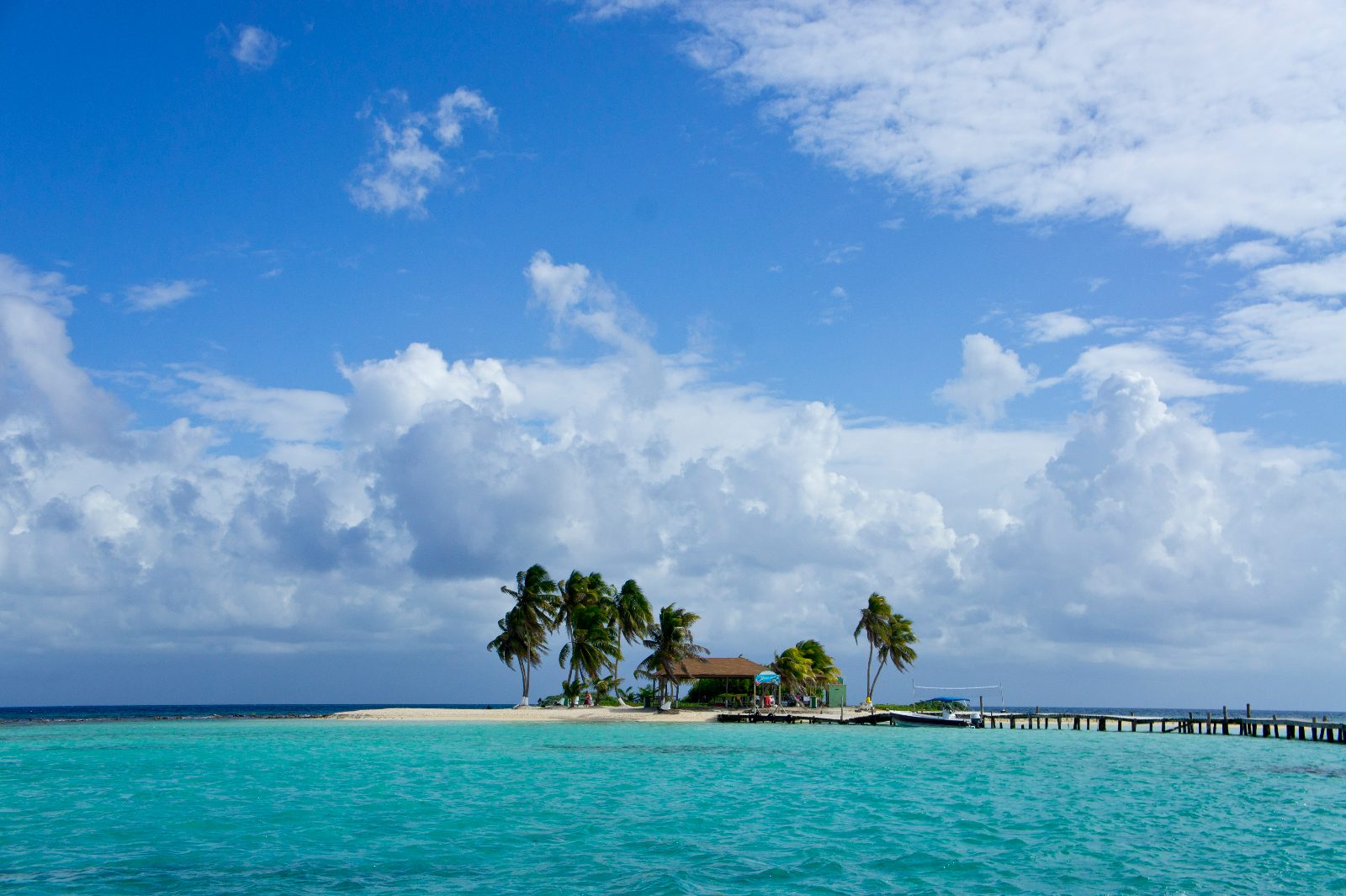
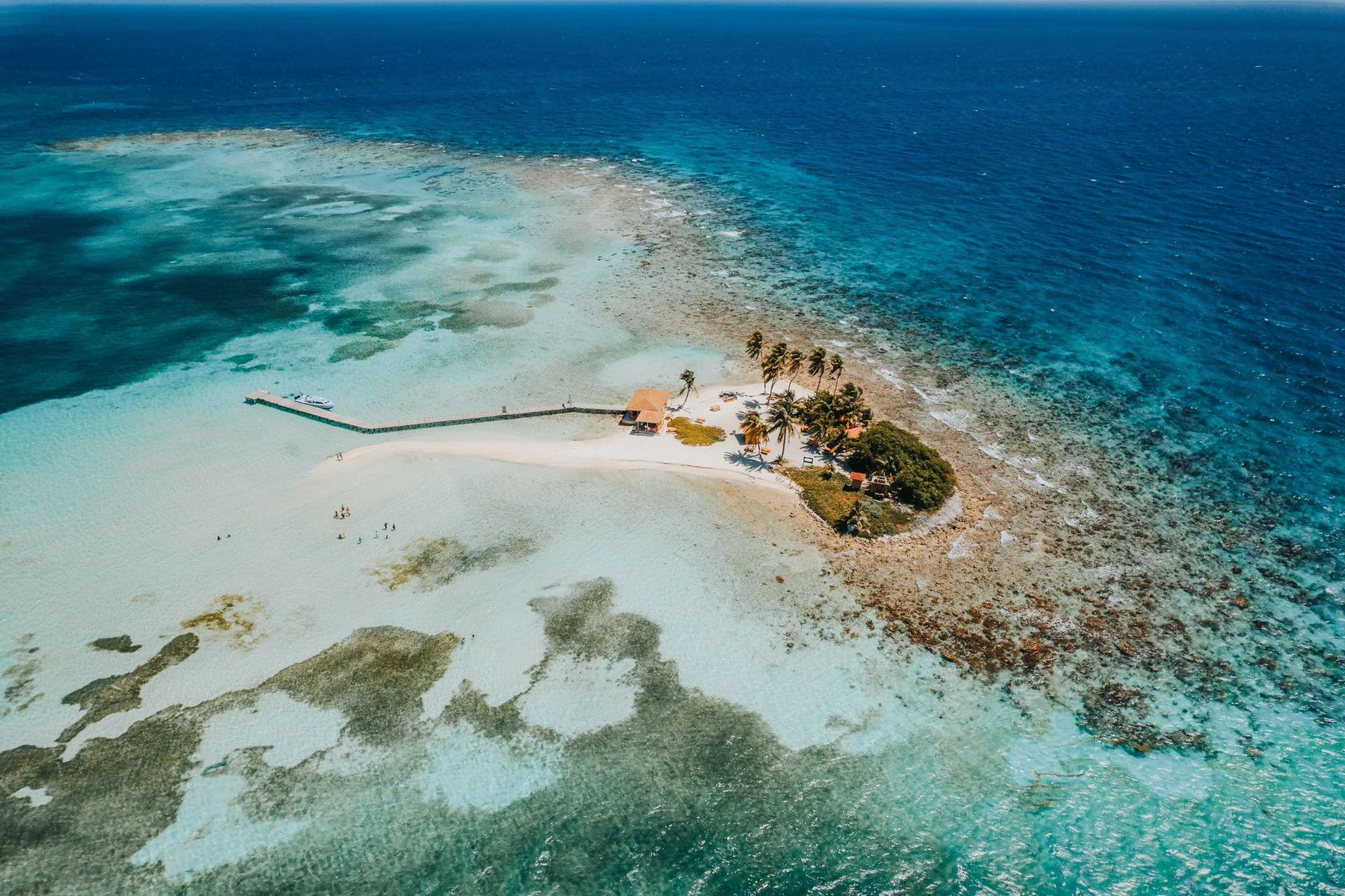
A small sand islet ringed by shallow reef flats, popular for its close-in coral gardens reachable within a short swim from the beach. The entire caye measures only a few acres above water.
The largest of Belize's three coral atolls, sitting roughly 30 miles east of Belize City with drop-offs plunging well beyond recreational snorkel depth. Its lagoon and fringing reef host over 65 recorded coral species.
Shallow patch reefs just offshore from Caye Caulker where seagrass beds and coral heads shelter juvenile fish and occasional manatees. The area is a common stop for boats combining island time with reef snorkeling.
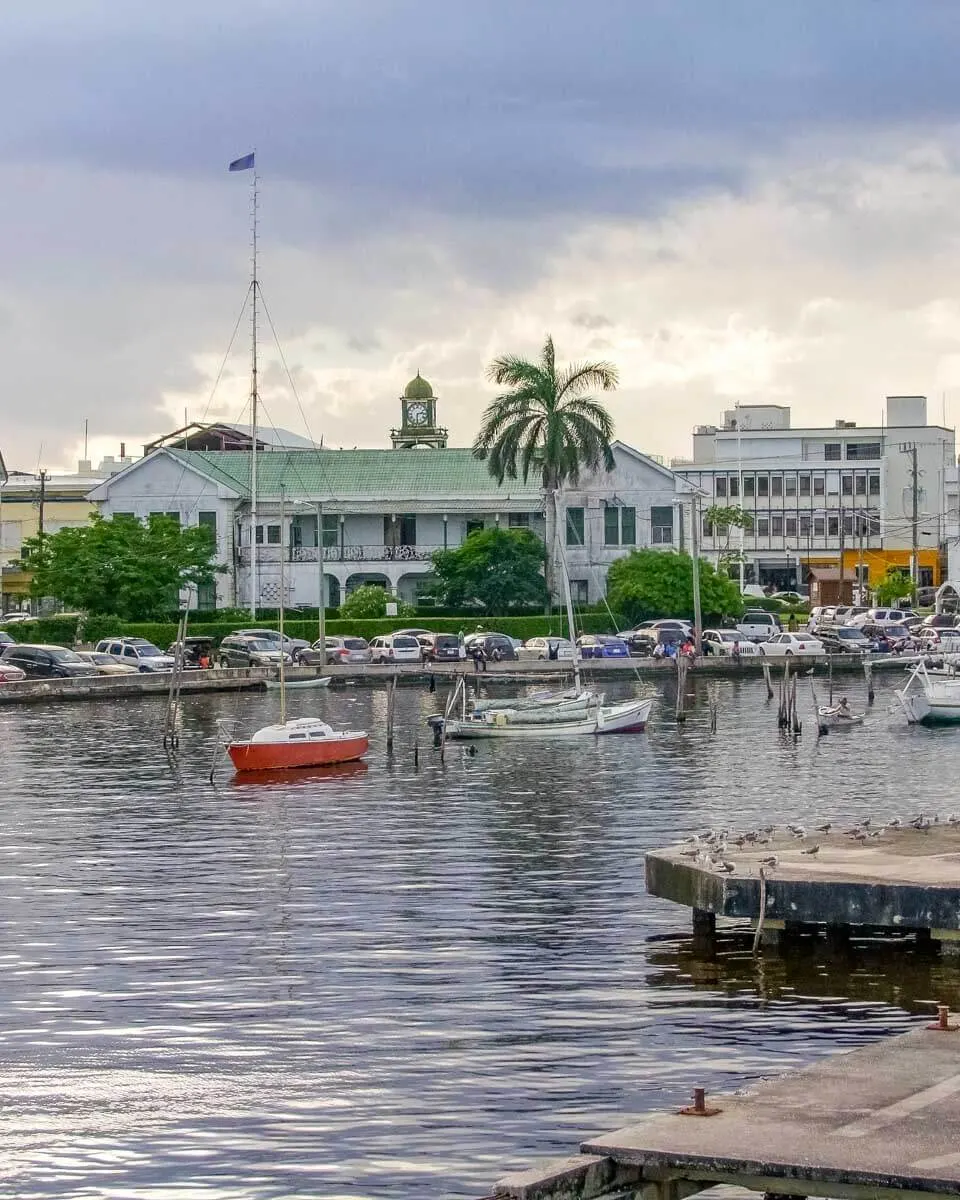
You board a twin-engine dive boat at the municipal dock shortly after eight in the morning, when the harbor still reflects the pastel facades of colonial Belize City. The captain steers east, clearing the river mouth and entering open Caribbean water.
Within twenty minutes, the reef line appears as a darker stripe beneath the surface, and the boat slows to anchor at a mooring buoy installed by the Marine Reserve.
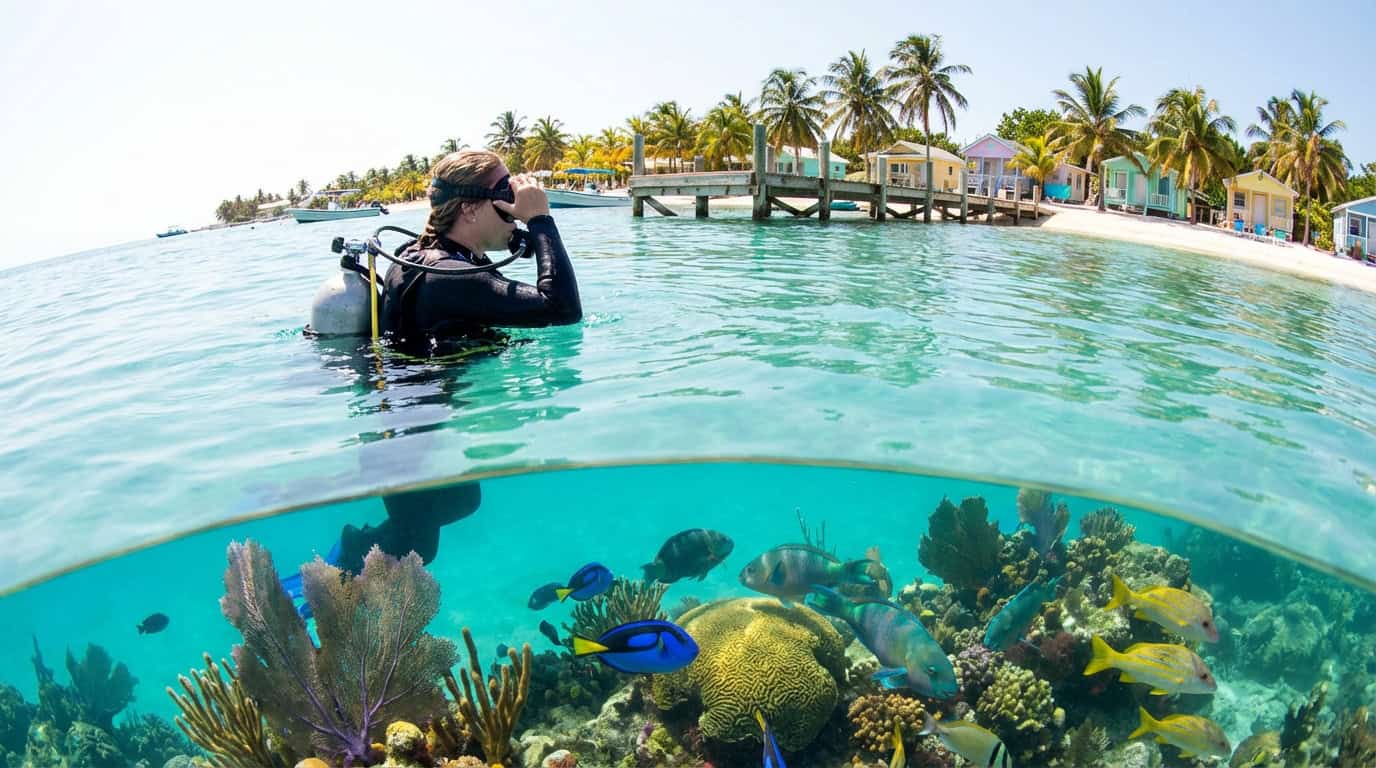
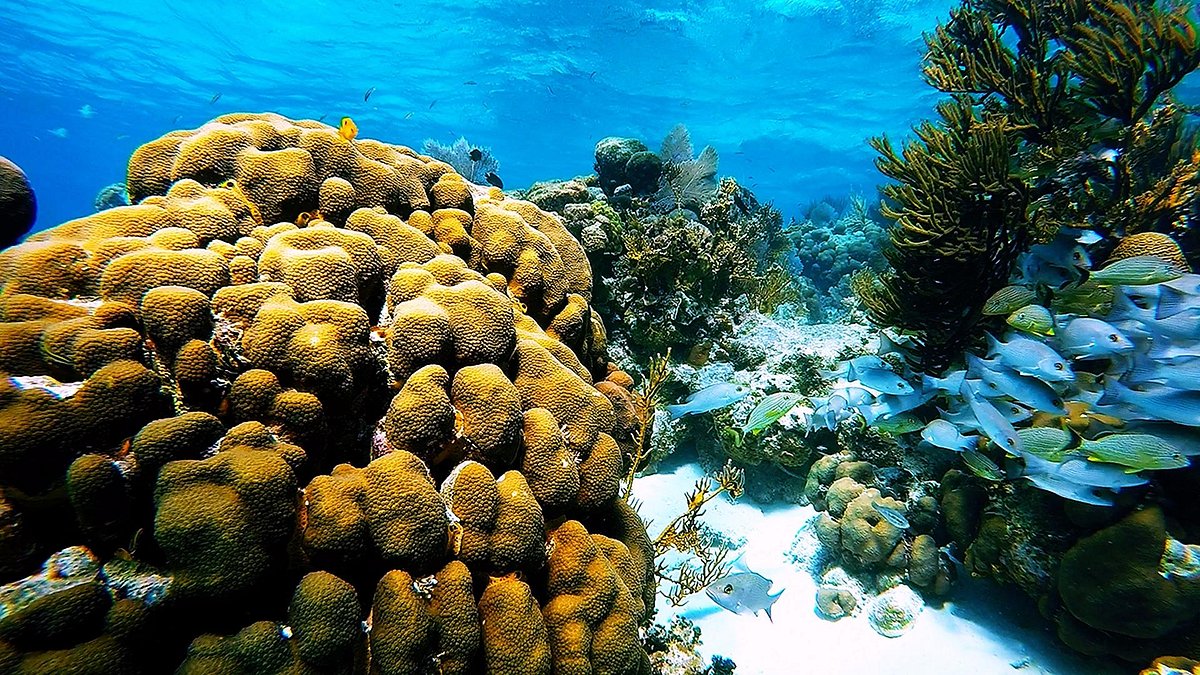
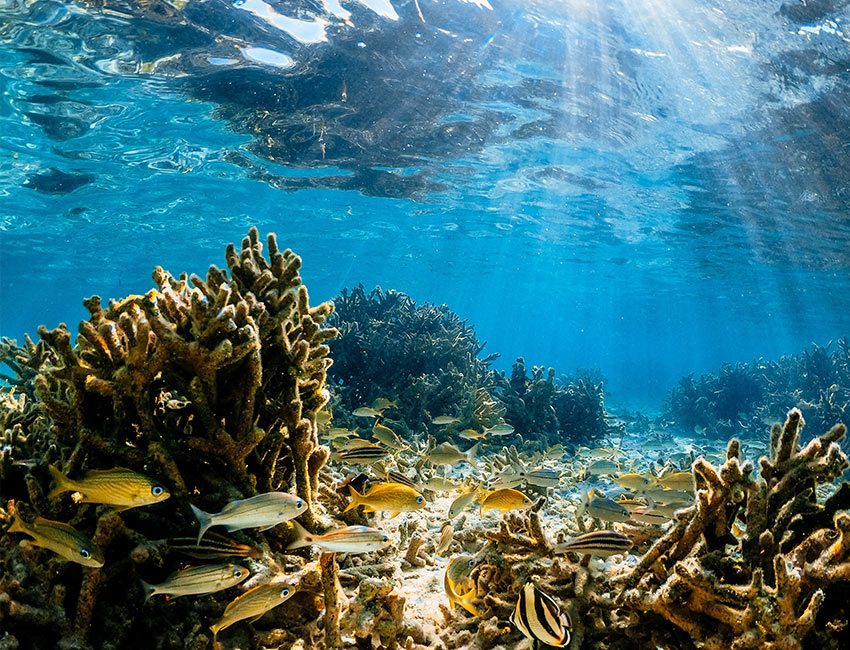
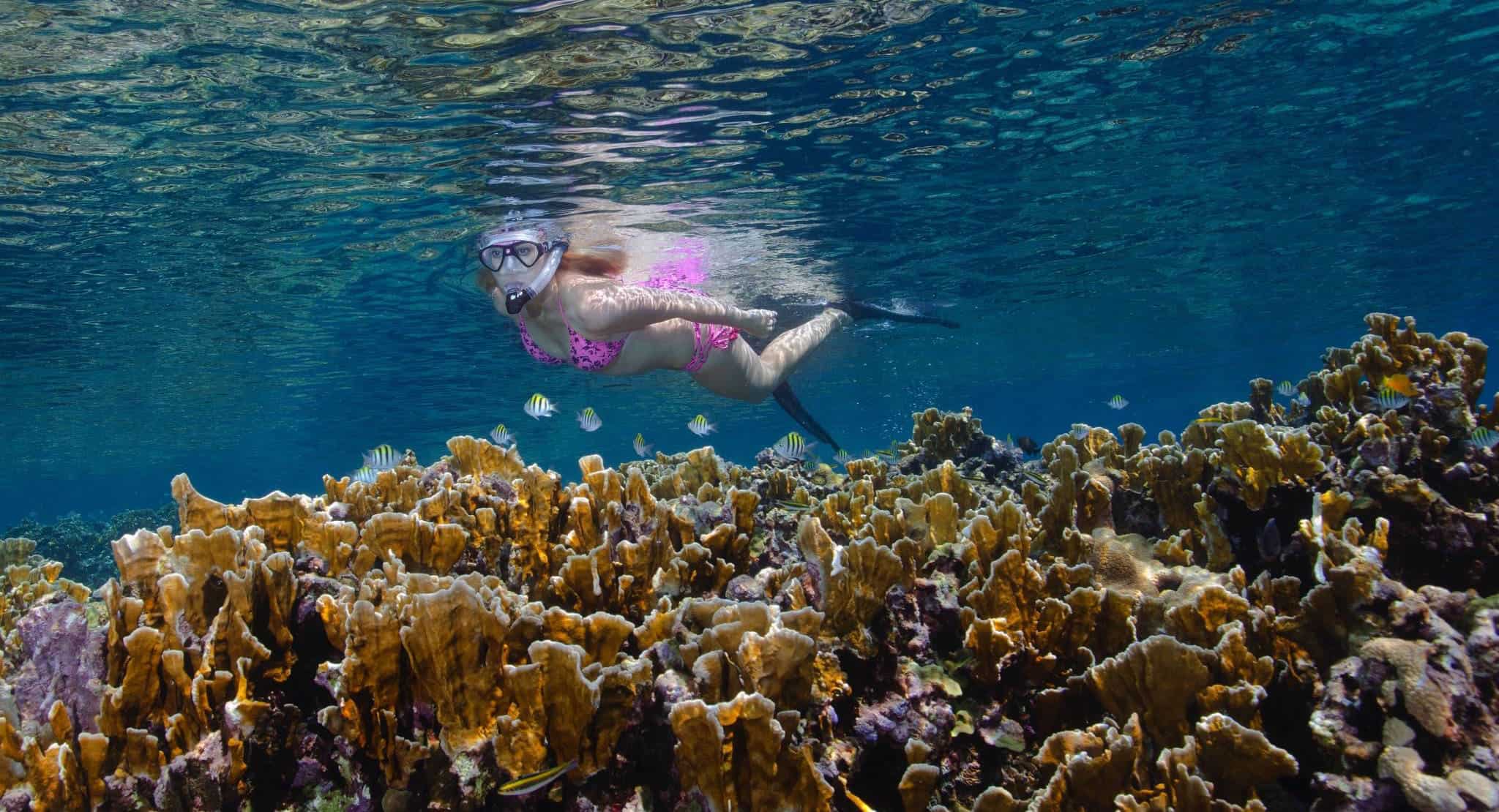
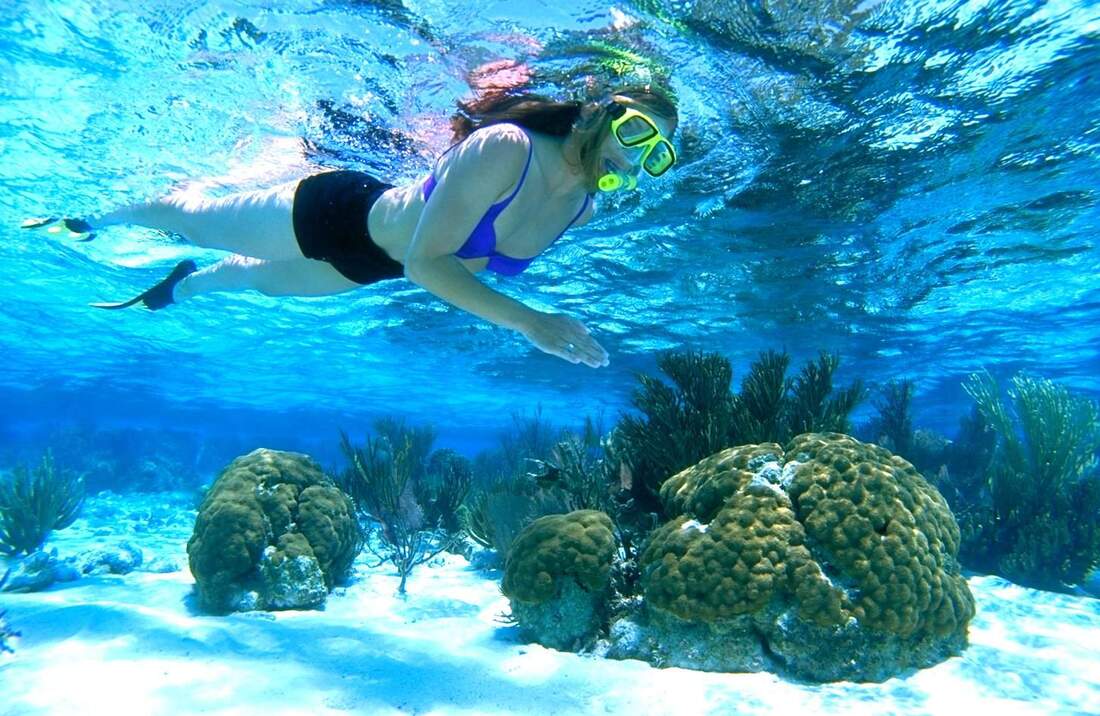
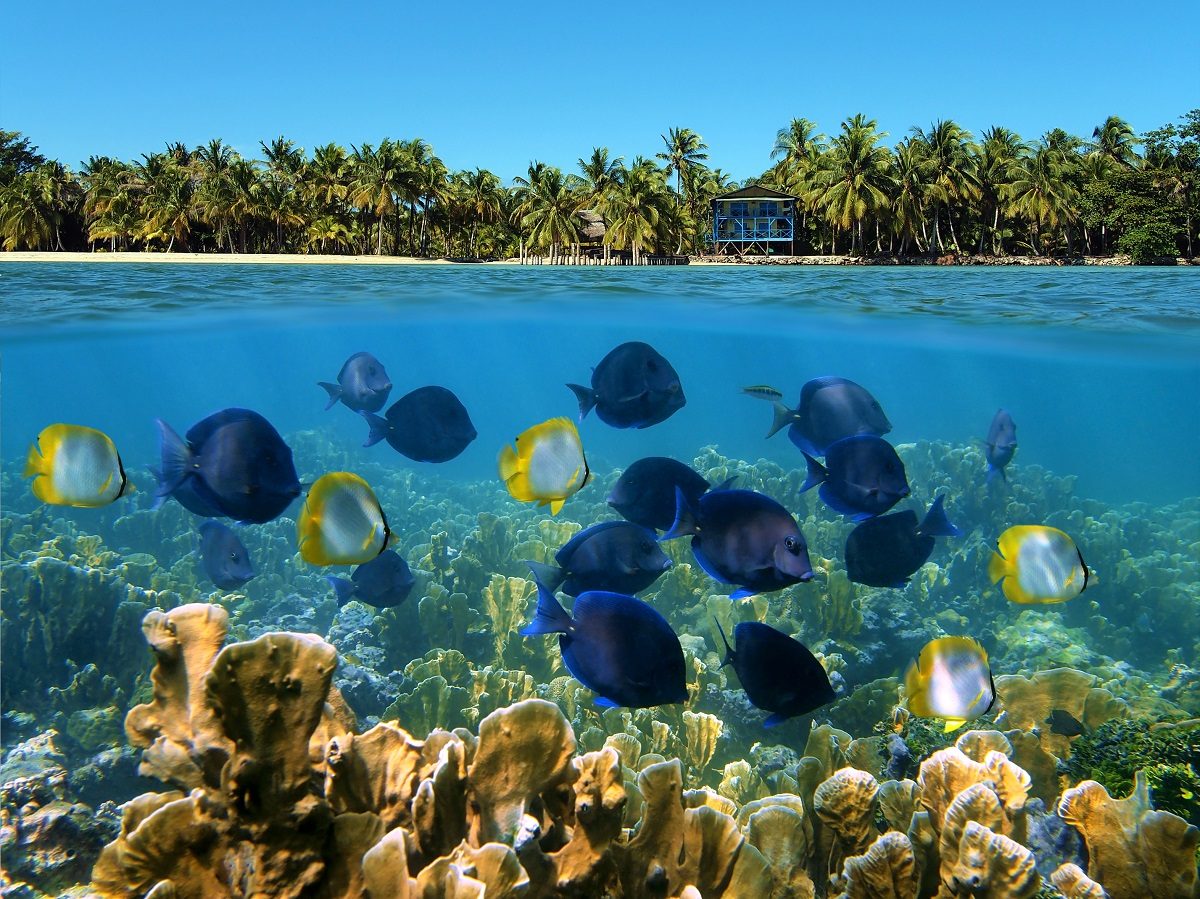
You adjust your mask, step off the stern platform, and descend into water warm enough to forget you are wearing a wetsuit. The coral begins six feet below, branching staghorn formations that give way to massive brain coral heads the size of compact cars. Sergeant majors and blue tang dart through the columns. You follow the reef's contour, drifting over sandy patches where spotted eagle rays rest half-buried. A nurse shark sleeps beneath a coral overhang, motionless except for the slow pulse of its gills.
Your guide points toward a formation of elkhorn coral, its antler-like branches home to juvenile yellowtail snapper and parrotfish that scrape algae from the limestone. You surface briefly to clear your snorkel, then dive again to examine a colony of Christmas tree worms, their spiraled crowns retracting at your shadow. The boat's horn signals the return, and you climb back aboard, skin tight with salt, having spent sixty minutes suspended above a structure older than any city on the mainland.
Todos los detalles de tu próxima aventura en un solo lugar
The Belize Barrier Reef stretches 190 miles along the Caribbean coast and holds the distinction of being the second-longest coral system on Earth.
Snorkeling in Belize City grants access to the northernmost section of the Mesoamerican Reef, where elkhorn coral, brain coral, and plate coral have grown for millennia in waters that range from fifteen to sixty feet deep. The reef was inscribed as a UNESCO World Heritage Site in 1996, recognizing both its biodiversity and its vulnerability to warming seas and coastal development.
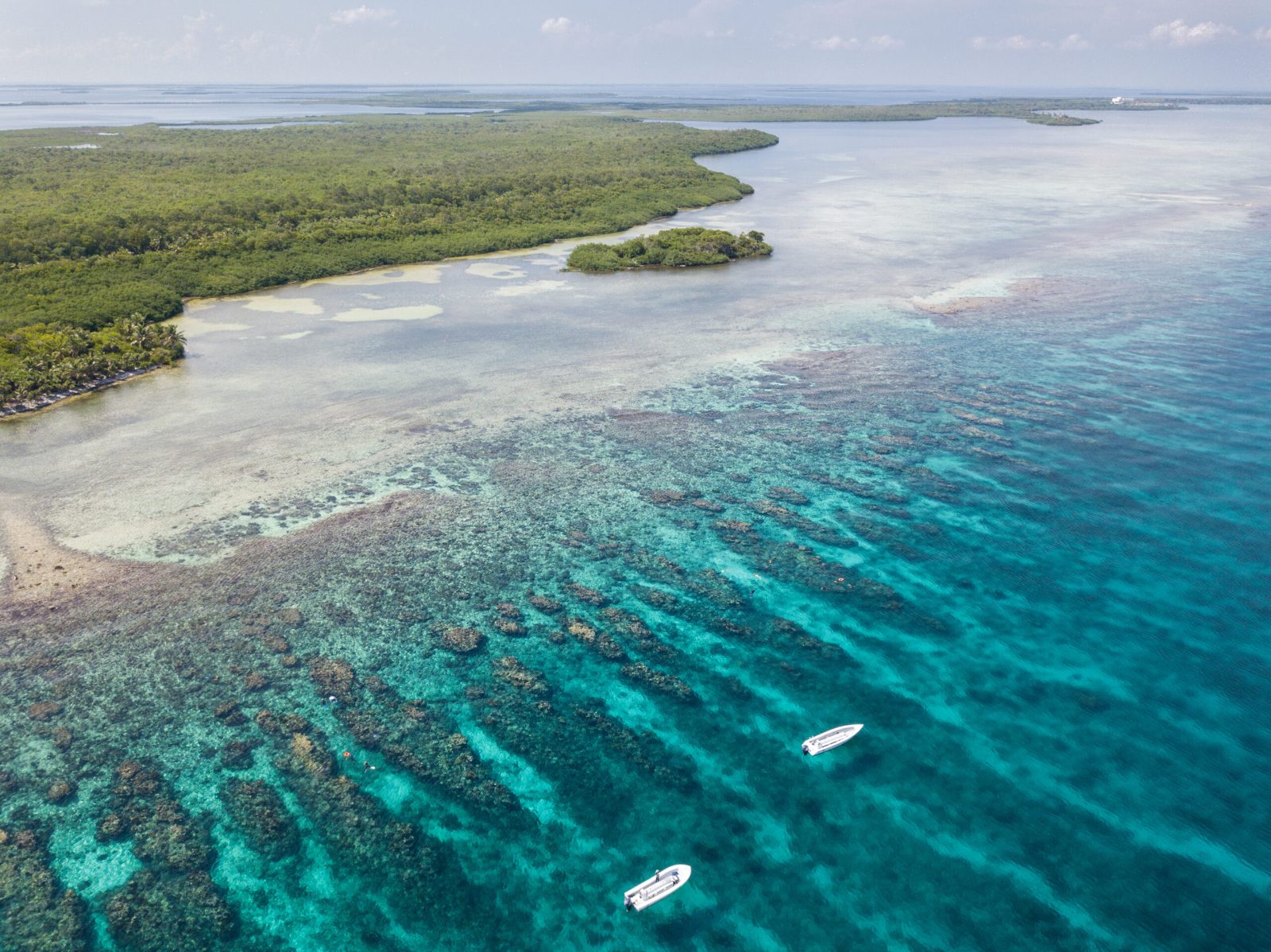
Most snorkeling in Belize City tours depart from the municipal port or private marinas along the coast, reaching dive sites within thirty to forty-five minutes by boat. The reef here supports over five hundred species of fish, sixty varieties of stony coral, and populations of nurse sharks, southern stingrays, and hawksbill turtles. Visibility averages seventy to one hundred feet during the dry season, peaking between February and May. Morning departures between eight and eleven capitalize on calmer sea conditions and sharper light angles that illuminate the coral architecture below the surface.
The barrier reef functions as both ecological refuge and economic anchor. It shields Belize City from hurricane storm surge while generating an estimated two hundred million dollars annually in tourism and fisheries revenue. Marine biologists have cataloged over fourteen hundred species within the reef system, including the Caribbean reef squid, the queen triggerfish, and colonies of pillar coral that grow less than one centimeter per year. The reef flat closest to shore sits in water shallow enough to stand, but snorkeling excursions typically target deeper spur-and-groove formations where coral ridges alternate with sandy channels and pelagic fish move in migratory patterns.
Conservation pressure has intensified since 2009, when the World Heritage Committee placed the reef on its endangered list due to mangrove clearing and offshore oil exploration. Belize enacted a moratorium on oil activity in 2018, and the reef was removed from the endangered designation in 2018. Tour operators now emphasize reef-safe practices, including anchor-free mooring and bans on sunscreen containing oxybenzone. The reef remains a living laboratory, one where snorkelers float above structures that predate human settlement in the region and witness ecosystems still adapting to a warming ocean.

The reef flat closest to shore sits in water shallow enough to stand, but excursions typically target deeper spur-and-groove formations where coral ridges alternate with sandy channels.
Swimwear under light, quick-dry clothing is standard for snorkeling in Belize City excursions, since you'll be in and out of the water from a boat. Reef-safe sunscreen is strongly preferred over standard sunblock, as many operators discourage oxybenzone-based products near coral.
Most boats heading out for snorkeling in Belize City have limited dry storage, so pack light in a small waterproof or dry bag rather than a full backpack. There's no security screening at marinas, but valuables should be left secured at your hotel rather than brought aboard.
Underwater photography is welcome throughout the reef, and many visitors bring GoPros or waterproof phone cases to capture coral and marine life. Flash photography has no real effect underwater, and drone use over the reef requires separate permission since the area falls within a protected marine zone.
Children snorkeling on the reef should wear a life vest and stay within arm's reach of an adult at all times. Many operators set a minimum age for boat trips, so confirm this directly with the operator before booking.
Access to the Belize Barrier Reef is by boat only, and entry into the water typically requires climbing down a ladder or stepping off the boat platform, which limits accessibility for wheelchair users or those with limited mobility. Travelers should contact their chosen boat operator in advance to ask about platform height, ladder design, and any adaptive equipment available.
Bottled water is generally allowed on board and encouraged given the tropical heat, while glass containers are not permitted on most boats for safety reasons. Snacks are typically fine between snorkel stops, but eating is usually paused while the boat is underway or anchored near coral.
Open water, no gate hours
Open 24 hours daily, best access 08:00–11:00
location
Opening hours
00:00 – 23:59
Getting there
City-center access via metro and bus
Accessibility
Most experiences are wheelchair-friendly — check individual tours
What to bring
Comfortable shoes, water, phone for mobile voucher
Car · 10-20 min from city center · Free to low-cost parking near marinas
Drive to a Belize City marina or Fort Street Tourism Village where reef boats depart; parking is available near most marina areas.
Because the Belize Barrier Reef itself has no gate or entrance fee (0 BZD), there is no site-level cancellation charge. Refund and rescheduling terms depend entirely on the individual boat operator or tour booked, so check the specific operator's policy at the time of booking.
Recommended time
Half a day
Most snorkeling in Belize City trips run as a half-day outing, covering the boat transfer out to the reef, one or two snorkel stops, and the return run, with early departures inside the 08:00-11:00 window catching calmer seas and sharper underwater visibility before wind picks up. Afternoon departures still run but often meet choppier water and lower clarity as the breeze builds, so add a buffer if you're prone to seasickness. Full-day snorkeling in Belize City tours exist for multiple reef sites and a longer surface interval between stops. Queues are minimal since boats depart on a scheduled window rather than a walk-up line, but arriving 15-20 minutes early for check-in keeps the group on schedule.
Crowd levels through the day
Clima · afluencia · precio medio — los puntos pasan de verde a ámbar y rojo según sube cada indicador.
Dry season brings cooler air temperatures and generally calmer seas, making underwater visibility more consistent. This period overlaps with peak cruise ship arrivals in Belize City, so marinas and reef sites can feel busier.
Boat operators for snorkeling in Belize City often have limited daily capacity, so securing a spot a day or two ahead helps avoid sold-out departures.
Belize City, Belize District, Belize
Most reef-bound boats depart from marinas along the Belize City waterfront
Get directionsThe Belize Barrier Reef, stretching 190 miles along the Central American coast, began forming roughly 500,000 years ago atop limestone foundations left by earlier reef systems. Charles Darwin surveyed the structure in 1842 during his voyage aboard HMS Beagle, later describing it in his coral reef treatise as one of the most remarkable reef complexes in the Caribbean. His observations helped establish the scientific understanding of barrier reef formation and positioned Belize's underwater landscapes within the emerging field of marine geology. For centuries, coastal Maya communities and later colonial settlers relied on the reef's fisheries for subsistence and trade. By the mid-20th century, commercial fishing operations intensified, targeting lobster, conch, and reef fish. The reef's accessibility from Belize City made it a natural departure point for fishing fleets. Tourism operators began offering snorkeling in belize city during the 1960s, when lightweight diving equipment became widely available and visitors sought alternatives to archaeological sites inland. Early tours launched from rudimentary docks along the city waterfront, transporting guests to nearby cayes and reef shallows. By the 1980s, environmental scientists documented accelerating coral bleaching, overfishing, and coastal development pressures. Conservation groups collaborated with the Belizean government to establish marine reserves, including Hol Chan Marine Reserve in 1987. UNESCO inscribed the Belize Barrier Reef Reserve System as a World Heritage Site in 1996, recognizing its biodiversity and geological significance as part of the Mesoamerican Reef System, the second-largest reef tract on Earth. The designation brought international funding and stricter regulatory frameworks. In 2009, UNESCO placed the reef on its endangered list due to mangrove clearing and offshore oil exploration threats. Belize enacted a moratorium on oil activity near the reef in 2017, and the site was removed from the endangered classification in 2018. Today, snorkeling in belize city tours operate under zoned management plans that balance tourism access with coral recovery efforts, while research stations monitor reef health and climate adaptation strategies.
Barrier reef formation begins atop older limestone platforms along the Central American shelf.
Charles Darwin surveys the reef during HMS Beagle voyage, later publishing analysis of its structure.
Commercial snorkeling tourism begins from Belize City, using motorized boats to reach shallow reef sites.
Hol Chan Marine Reserve established, creating the first protected snorkeling zone near Ambergris Caye.
UNESCO inscribes Belize Barrier Reef Reserve System as a World Heritage Site for its biodiversity.
Reef placed on UNESCO endangered list due to coastal development and proposed oil drilling.
Belize government enacts permanent moratorium on offshore oil exploration near reef areas.
UNESCO removes reef from endangered classification following conservation policy reforms.
Shallow sandy-bottomed channel inside Hol Chan Marine Reserve where nurse sharks and southern stingrays glide close to the surface. Snorkelers hang back near the boat ladder and shoot downward as guides toss bait to draw the animals into frame. Camera housings are recommended since the action happens fast and close.
Narrow natural channel cut through the reef wall, the signature shot of any snorkeling in belize city trip, with a sharp dropoff from turquoise shallows into deep blue where grouper and eagle rays pass. Position mid-channel above the coral wall for the clearest light shafts. Currents can run strong through the cut so stay close to your guide.
A small sand-and-palm islet ringed by shallow reef flat, popular for wide shots that combine the caye, clear water and reef in one frame. Best captured wading at the shoreline looking outward toward the barrier reef line. Boat access only, roughly 45 minutes from Belize City docks.
A dramatic drop-off point at the atoll's southern tip where the reef wall plunges and pelagic fish such as jacks and occasional eagle rays pass in open water. Photographers position along the wall edge in open water rather than over the shallow flat. Conditions vary with current so this spot suits more experienced snorkelers.
A narrow gap between two sections of Caye Caulker island where clear shallow water meets the reef flat, often combined with belize city snorkeling day trips for an easy in-water shot with the split's dock pilings and turquoise water as background. Wade in from the sandy shore near the dock. Water is calm and shallow, suited to casual shooting.
Snorkeling in Belize City means a boat ride out to the barrier reef rather than a walk-in beach experience, so plan around transit time and open water rather than a fixed venue.
Kids should be comfortable floating and breathing through a snorkel in open water before booking, since there is no shallow lagoon to practice in first.
Ask your operator about life jackets or vests for weaker swimmers, as flotation support lets non-swimmers still see the reef without independent swimming.
Reaching the outer reef involves open-water boat travel, which can feel long for toddlers, so bring a hat, sunscreen, and a distraction for the ride out.
Arriving in the 08:00-11:00 window means calmer seas, which helps kids who get queasy, and breaking the morning into short snorkel sets with boat breaks keeps young children from tiring out.
Reef glare and boat motion affect kids more than adults, so apply reef-safe sunscreen before boarding and consider motion-sickness precautions discussed with your pediatrician in advance.
Most snorkeling in Belize City trips leave from the docks near the Fort Street Tourism Village and the Belize City water taxi terminal, so breakfast and lunch mean a short walk into the surrounding streets rather than an on-site cafe. Expect casual waterfront spots serving Belizean staples like fry jack and stewed chicken alongside seafood plates for the post-boat crowd.
Open-air deck overlooking the cruise dock, popular for burritos and cold Belikin beer after a morning on the water; fills up fast when ships are in port.
Sit-down spot along Haulover Creek known for seafood platters and burgers; a solid choice for a relaxed post-snorkel lunch away from the tourist strip.
Casual dining room serving Belizean breakfast plates like fry jack and beans, good for fueling up before an early boat departure.
Long-running local favorite for a filling lunch if you want something heartier than dockside snacks after snorkeling.
Todo lo que necesitas saber para tu viaje
No, there is no single gate fee for the Belize Barrier Reef since it is open water off Belize City, though individual boat operators charge for their own tours.
The reef itself has no fixed gate hours and is accessible daily, but most snorkeling in Belize City tours depart in the morning window between 08:00 and 11:00.
The best arrival window is between 08:00 and 11:00, when seas are calmer and morning light gives clearer underwater visibility.
Yes, booking ahead is recommended since boat capacity for snorkeling in Belize City tours is limited and popular departure times fill quickly.
Access is by boat only, and most vessels require climbing down a ladder or stepping off a platform, so it's best to confirm mobility accommodations directly with your chosen operator.
Quick-dry swimwear, a hat, and reef-safe sunscreen are standard for a comfortable Belize City snorkeling tour.
Bottled water is typically fine, but glass containers and alcohol are generally restricted on reef boats for safety and conservation reasons.
Most snorkeling in Belize City tickets include pickup from a marina or the Fort Street Tourism Village, both reachable by taxi or on foot from waterfront hotels.
Yes, though many operators set a minimum age and require life vests for children in the water at all times.
Since there's no site-level entrance fee, cancellation terms depend on the specific boat operator, so it's worth checking their refund window before booking.
The Belize City Swing Bridge, St. John's Cathedral, and the Museum of Belize are all within a short walk of downtown marinas and pair well with a reef excursion.
Yes, operators actively enforce rules against touching coral, spearfishing, and littering to protect the marine reserve areas within the Belize Barrier Reef.
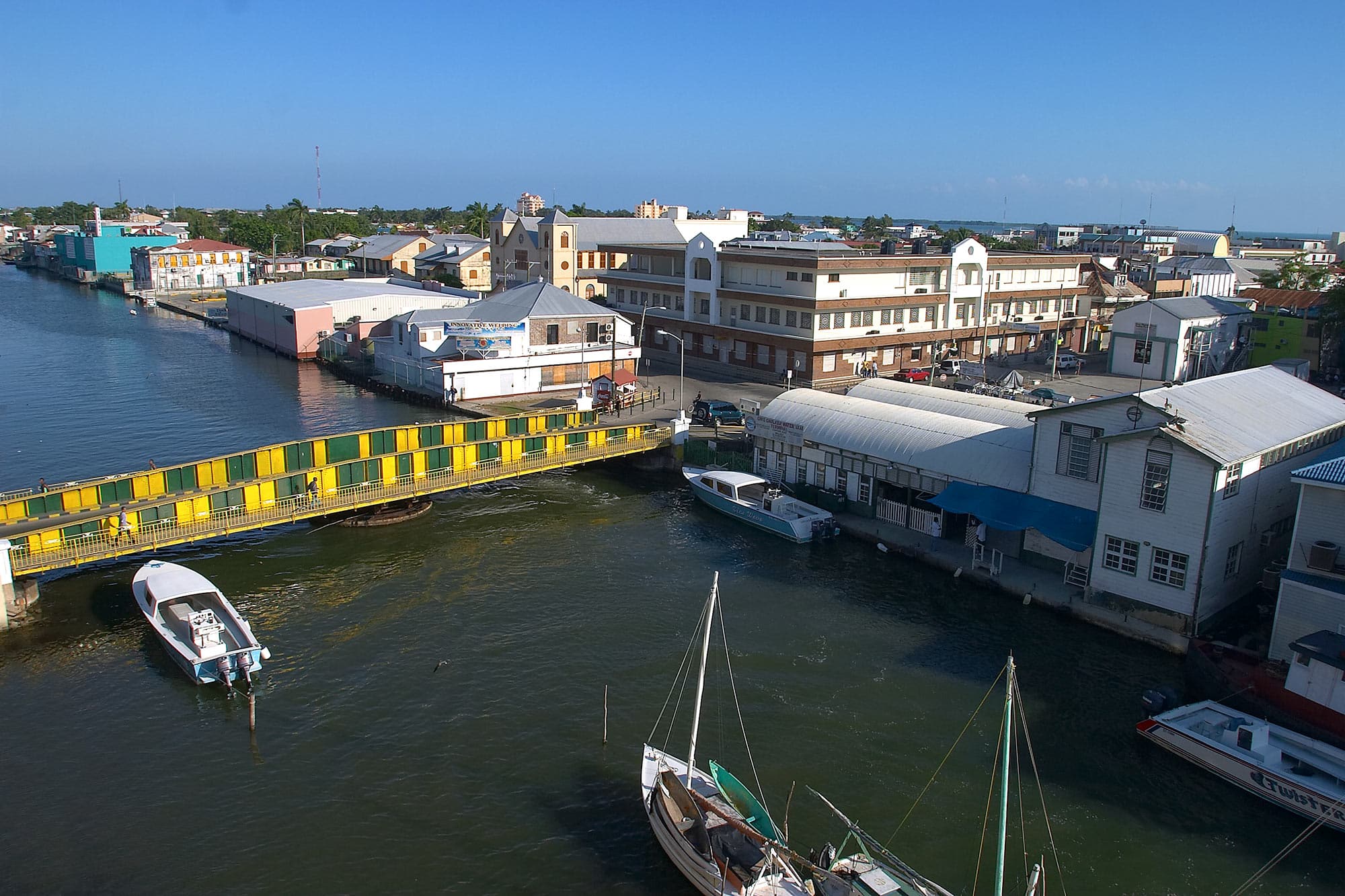
One of the few remaining manually operated swing bridges in the world, spanning Haulover Creek in the city center. It connects the north and south sides of Belize City and still opens for boat traffic.
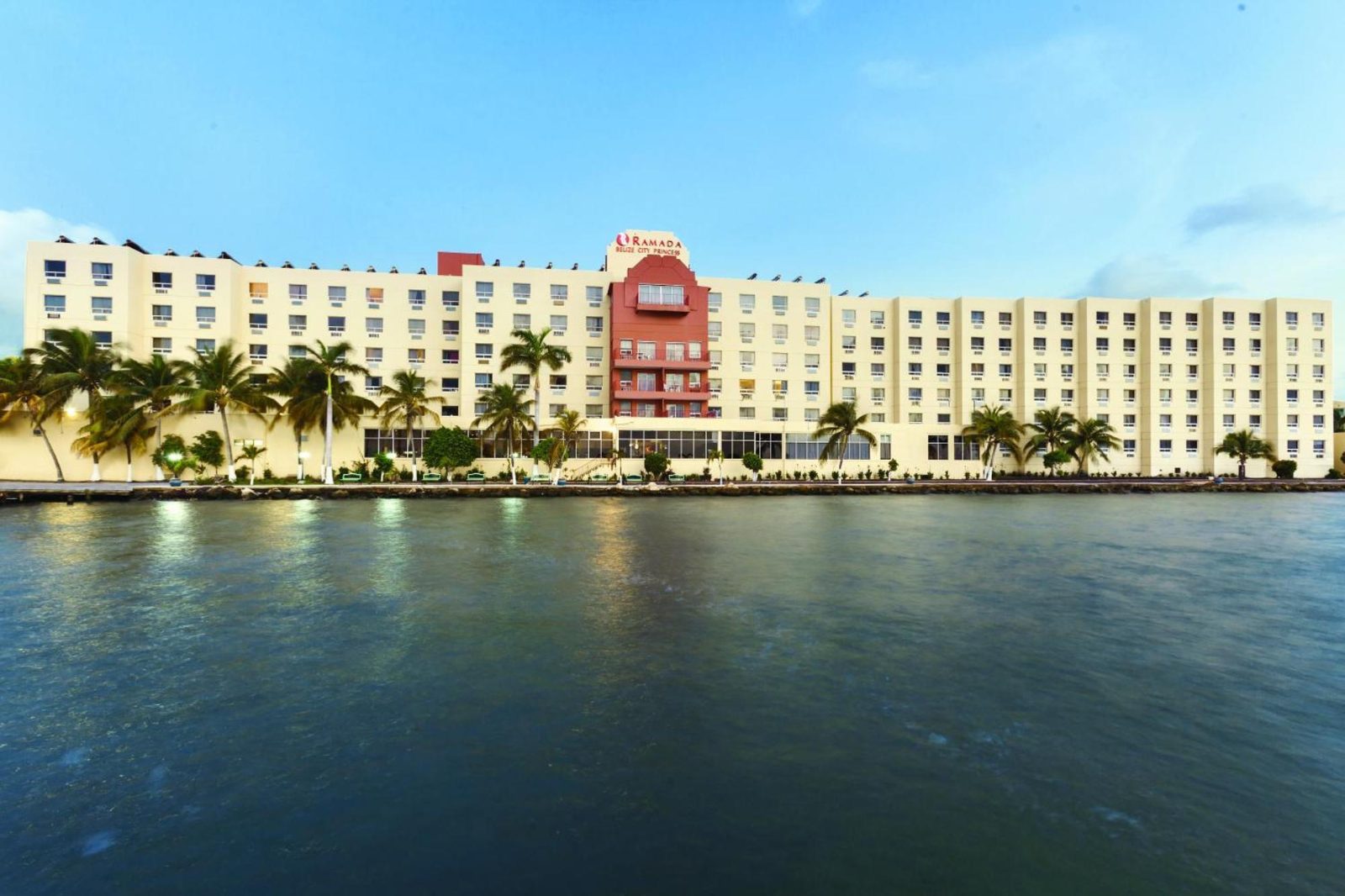
Hotels along the Fort Street and Marine Parade area offer easy access to marina departures for reef trips.
Únete a miles de viajeros felices que han descubierto esta increíble experiencia
Reserva tu experiencia ahora